The cart is empty
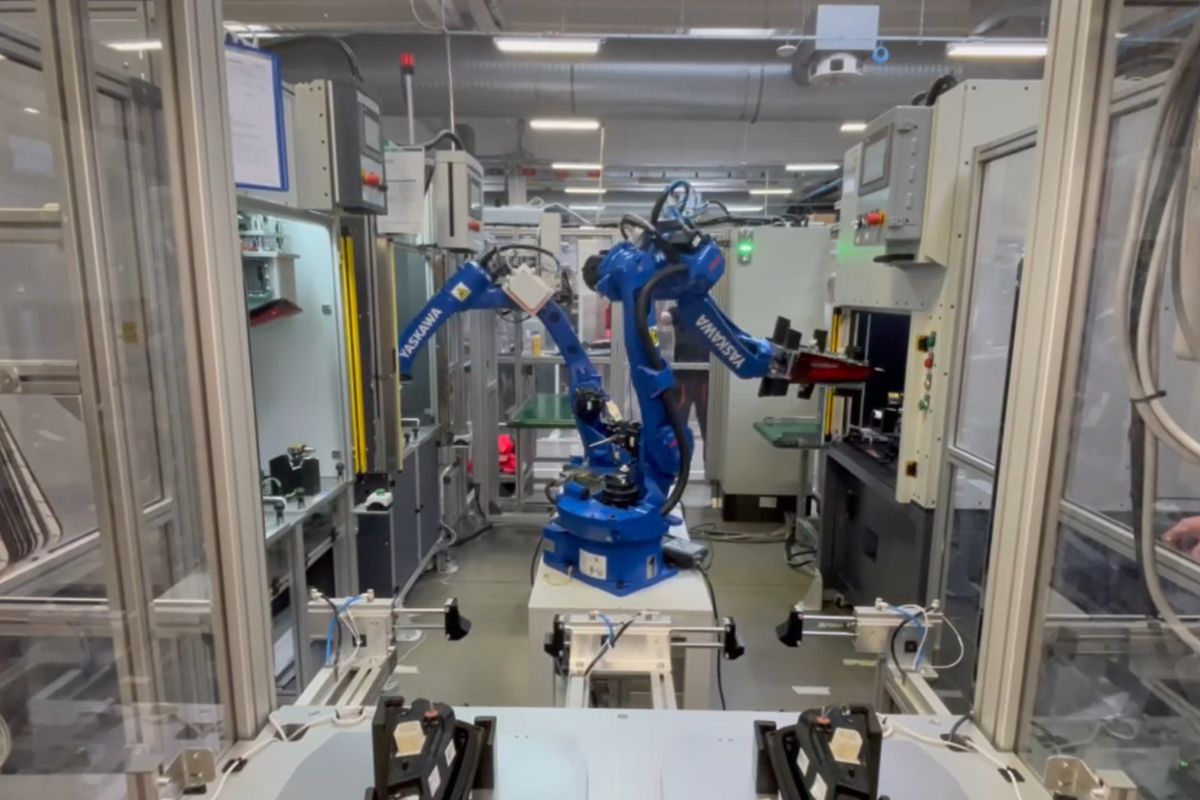
Robotic cell for automating testing, laser marking, and labelling of automotive lights
A technically advanced solution for a stable cycle time, higher productivity, and reliable quality in the automotive industry.
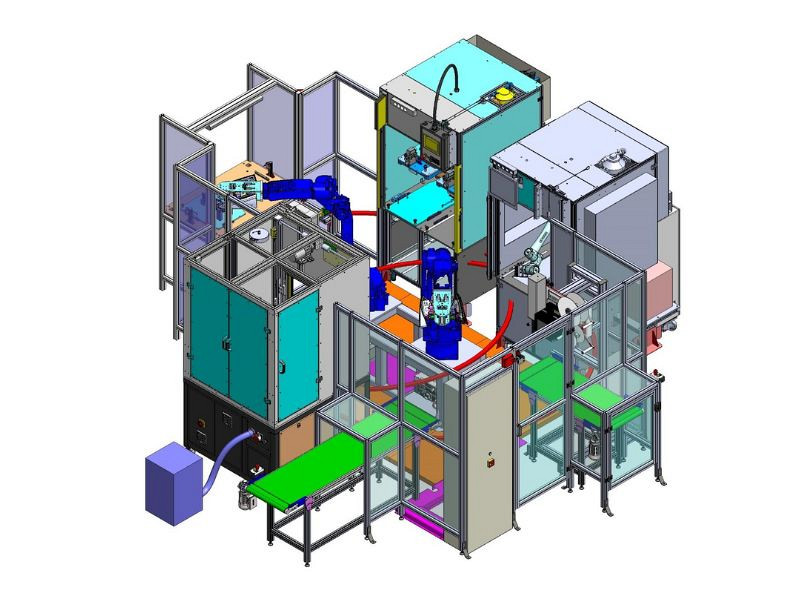
For a client in the automotive industry, we designed and built a dedicated robotic cell intended for the automated handling of existing process machines used for automotive lighting production. The cell integrates leak testing, laser marking, contacting, and labeling into a single, repeatable, and safe process. The solution is based on two industrial robots, specially designed grippers, transfer stations, and separate output conveyors for good and defective parts.
Initial challenge – The client faced challenges in achieving the required cycle time, high dependence on manual labor, and increased risk of errors and product damage during manual handling. The existing process required up to five operators, with efficiency heavily dependent on human factors. In addition, it was necessary to ensure reliable separation of good and defective parts and integrate existing machines into a single automated system.
Result – By robotizing the process, the client achieved a stable cycle time of 47 seconds per pair and increased productivity through continuous automated operation. The number of operators required was reduced from five to one, while product damage caused by manual handling was eliminated. The process became less sensitive to human error, and defective parts are reliably separated at an early stage of production.
Solution Description
The robotic cell is designed around three existing client machines:
- an automotive light leak testing system,
- a laser marking machine,
- and a contacting device.
The entrance to the cell features a workbench with dedicated fixtures. The operator only inserts the parts and confirms the presence of the part in the fixtures using a push button, after which the cell operates fully automatically. Two industrial robots are software-synchronized and share tasks as well as the workspace, enabling optimal use of time and space. At the end of the process, the lights are sorted into good and bad parts using two separate output conveyors.
The system is designed modularly, allowing adjustments for different light types, process modifications, or the integration of additional operations in the future.
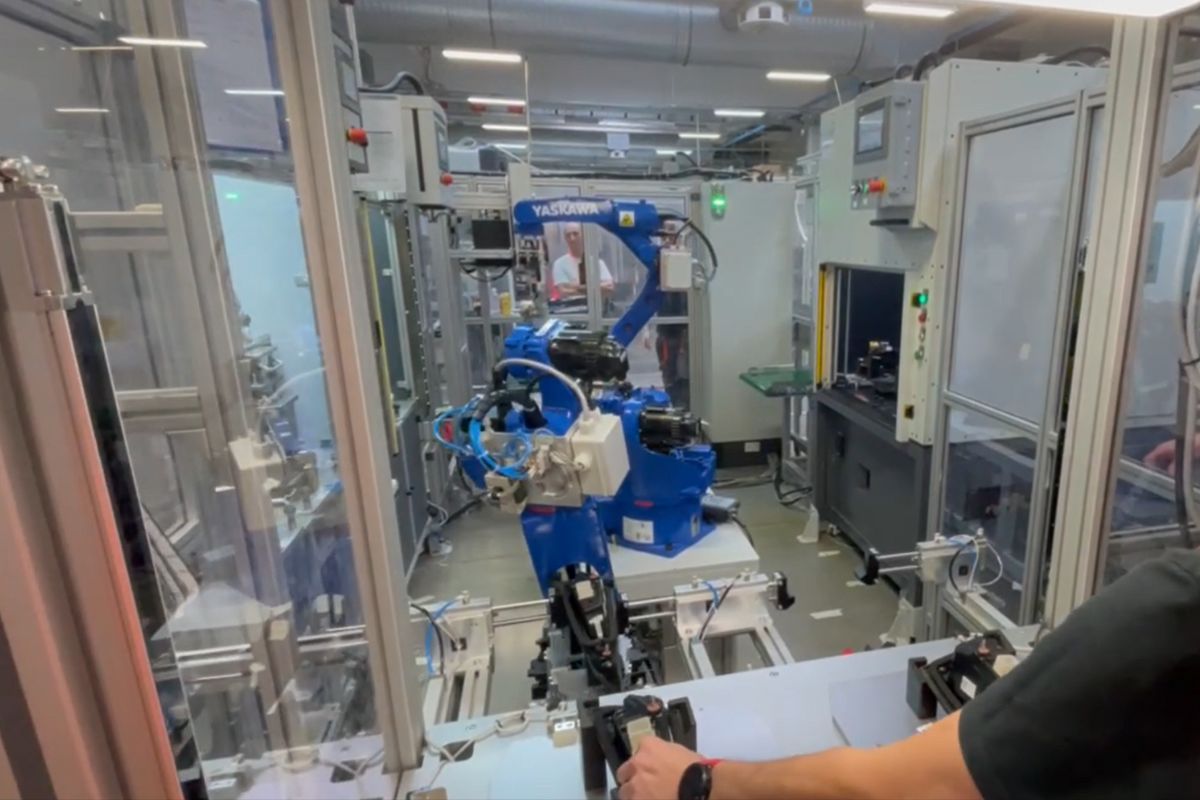
Loading lights onto the input workbench with fixtures
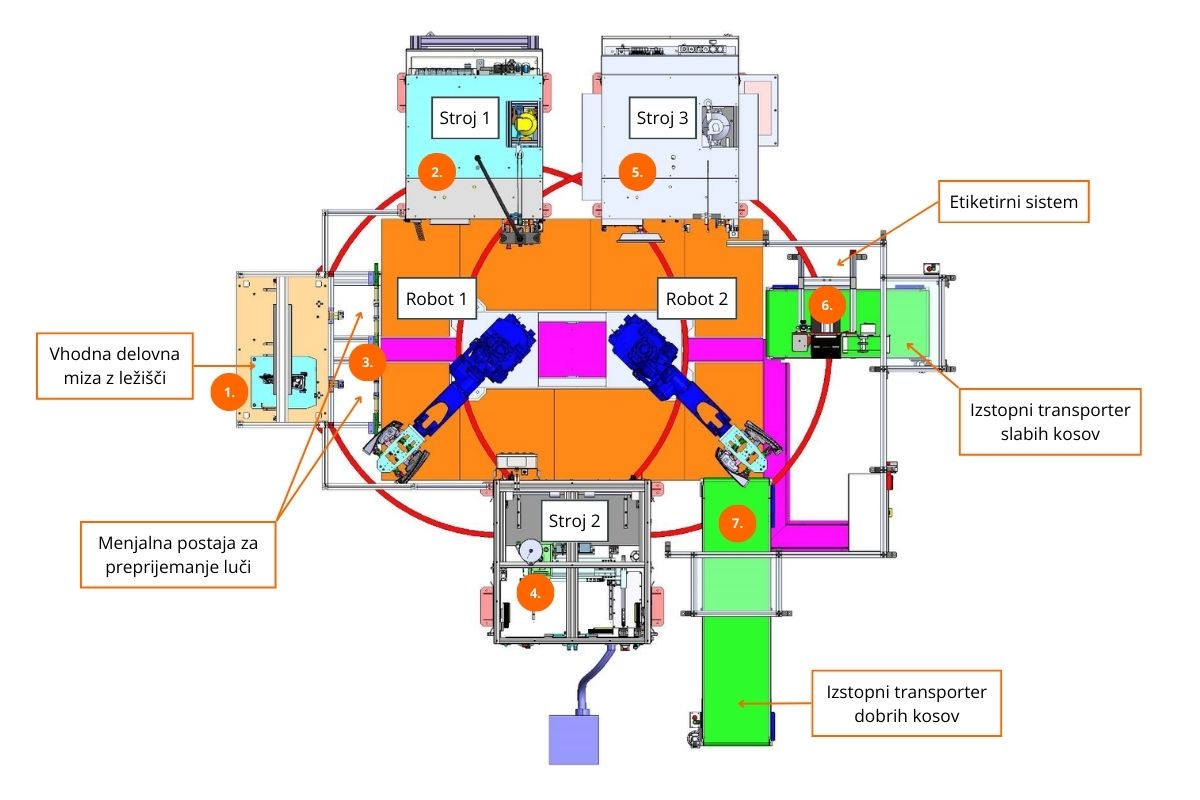
Operation Process of the Robotic Cell
1. The operator inserts the automotive lights into the input fixtures of the dedicated workbench and press a button to confirm the presence of the lights in the fixtures.
2. Robot 1 picks up the lights from the fixtures and transfers them to Machine 1, where light leak testing is performed.
3. After testing is complete, Robot 1 picks up the lights from Machine 1 and transfers them to the re-gripping station.
4. Robot 1 transfers the compliant light parts to Machine 2, where laser marking takes place.
5. Robot 2 takes over, picking up the lights from the laser machine and transferring them to Machine 3, where contacting and functional verification are carried out.
6. After completion, Robot 2 takes the lights to the labeling device, where an EOL label or a bad part label is applied.
7. Robot 2 sorts good parts from bad parts and places them onto the appropriate output conveyor.
8. The cell continues with the next cycle without interruption.
Our Solution Includes
- two industrial robots,
- custom robotic grippers,
- an input workbench with fixtures,
- re-gripping stations,
- a labeling system,
- an output conveyor for good parts,
- an output conveyor for bad parts,
- safety fencing with access control,
- central control and communication with existing machines.
The robotic cell is just one example of our dedicated solutions for the automotive industry. Check out other projects we have successfully implemented for clients in the automotive sector.
Custom Robotic Grippers
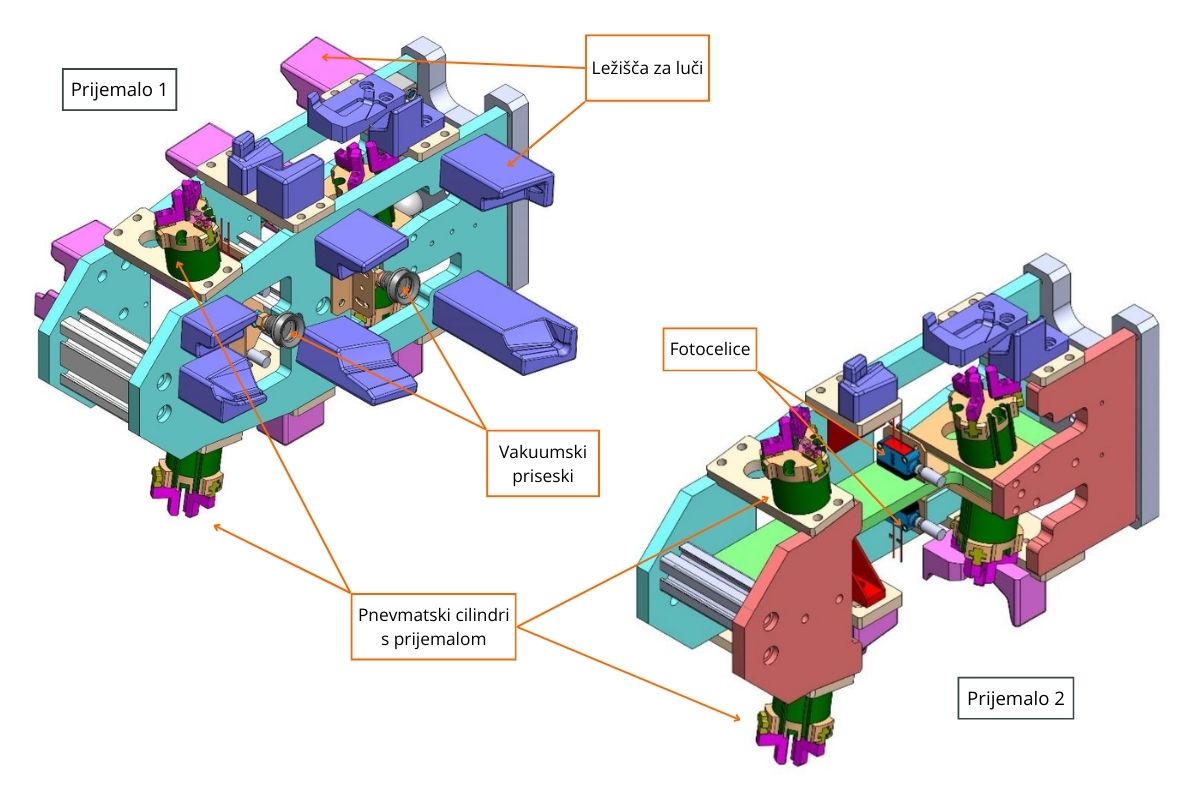
For reliable and safe handling of automotive lights, we developed custom robotic grippers tailored to the geometry, weight, and sensitivity of the lights. The grippers enable stable handling throughout all process phases without damaging surfaces and with high positioning repeatability.
Gripper 1 combines mechanical and vacuum gripping, accurately positioning the product in plastic rests. Stable gripping is ensured by vacuum cups and pneumatic mechanical components, making manipulation reliable even during complex orientations and dynamic transfers between stations. Part presence during mechanical gripping is verified by photocells, while the vacuum section is monitored via vacuum control, significantly increasing process safety and preventing transfer errors.
Gripper 2 is based on mechanical pneumatic gripping and is designed for repeatable, stable clamping, and precise positioning of products in processing machines. Part presence is monitored with photocells, enabling reliable operation during cycle production and reducing the risk of dropping or incorrectly placing the product.
This gripper design enables high process stability, short cycle times, and reliable operation in mass production, while providing flexibility for adaptation to various automotive light designs.
The effects of automation in industrial processes are reflected not only in a more stable cycle time and higher quality, but also in clearly measurable economic indicators. Key factors in such projects are primarily reduced need for manual labor, number of shifts, annual labor costs, and investment depreciation.
Calculate the Return on Investment (ROI) for Your Process
For a quick assessment of the financial impact of automation, use our ROI calculator to check payback time and potential annual savings.
Robotic cell for automotive lights